Harbour Town or Seaside Resort: Two Different Ways to Meet the Water
Harbour town or seaside resort: learn to read street layouts, public spaces and daily rhythms so you can choose the coastal setting that suits your visit.
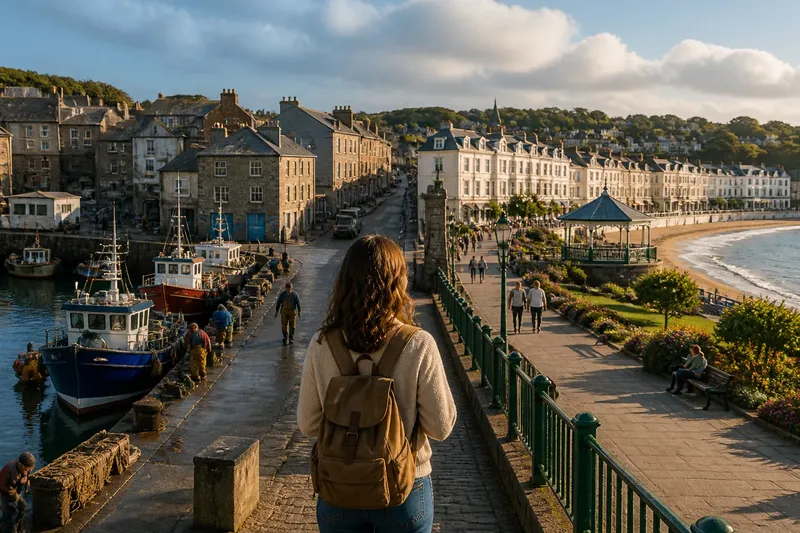
A harbour town or seaside resort usually reveals its character before you reach the water: one street may funnel toward working quays, while another opens onto a broad beach frontage. That difference is useful to notice. It tells you how the settlement has arranged everyday movement, visitor space and contact with the sea. It does not tell you that every harbour is industrious or every resort is idle; coastal places rarely respect tidy labels for long.
The more revealing question is not which type is better, but what each kind of place asks a visitor to do. A harbour town often makes the water part of a working landscape, with routes shaped by access and changing activity. A resort tends to make the water a destination, with streets and public spaces arranged for a stay. Read those patterns, and you can choose where to linger, what to expect from a walk and when the town is most itself.
What does the street plan tell you?
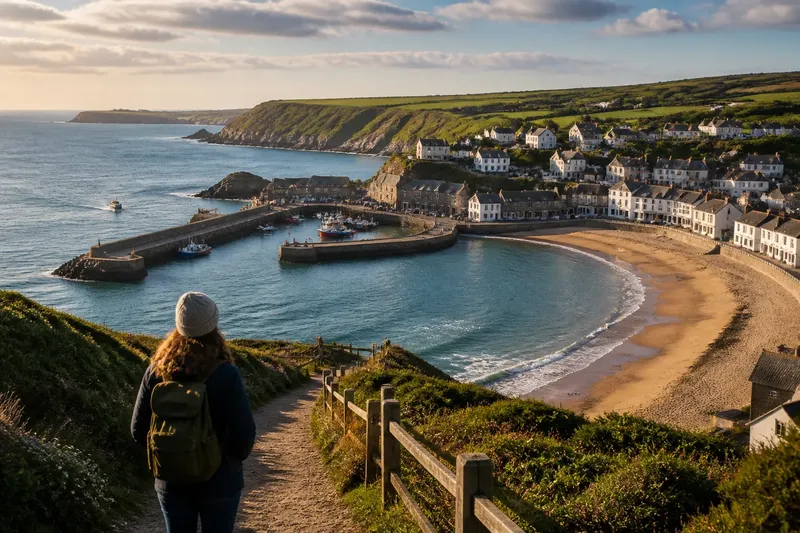
In a harbour settlement, streets commonly converge on a sheltered inlet, quay or landing place. The route may narrow as it approaches the water, then open beside a working edge. Buildings can turn their backs to prevailing weather or sit in a compact cluster behind the harbour. The result is not always picturesque; a useful route may be the one that leaves room for deliveries and keeps access clear.
Look for signs that explain why a street runs where it does. A lane may connect the quay with a market street, a boatyard or a road inland. A slope can make the harbour visible only in glimpses, then reveal it at the bottom. The settlement’s shape often follows the practical geography of anchorage, shelter and access, rather than a plan for an uninterrupted sea view.
Resort streets more often lead visitors toward a beach, seafront or public garden. A broad approach can make the shore feel like the settlement’s front room. Hotels, guesthouses, cafés and shops may cluster along the route, while side streets provide access to accommodation and quieter residential areas. Some resorts have a clear central axis; others spread around coves or a series of beaches, with no single street doing all the work.
These are tendencies, not diagnostic rules. A harbour can have a promenade and visitor district; a resort can retain a small working quay. Start with the direction of movement instead: do streets appear to serve access to the water for several purposes, or to draw visitors toward a particular stretch of shore?
How do public spaces use the water?
In a working harbour, the quay is public space with conditions. It may invite a slow walk, but it can also be a route for people moving equipment, maintaining boats or reaching a landing. Bollards, ramps, railings and signs are not decorative punctuation. They mark how the edge is used and where visitors should leave room.
That practical character can make a harbour an absorbing place to watch, provided you do not turn someone else’s work into a performance. Stand clear of gates and vehicle routes. Follow posted access rules, and use a public seating area or a nearby lane when the quay is busy. The best place to pause may be slightly away from the most obvious view.
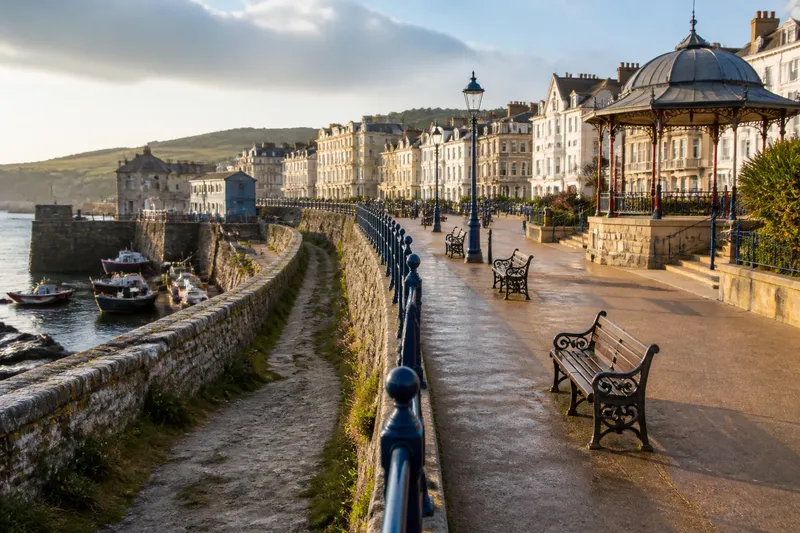
Resort public space usually gives visitors a more direct invitation to stay. A beach access, promenade, bandstand, square or seafront lawn may connect swimming, strolling and eating within a short walk. Benches and open ground support idling as much as movement. The water is presented as something to face, reach or spend time beside, though weather and local custom still shape how people use the space.
Notice who the space accommodates. A harbour edge may need to serve workers, residents and visitors at once. A resort promenade may make room for families, walkers and people arriving from nearby lodging. Neither arrangement is inherently more public. In both, the practical test is whether you can understand the intended route, find somewhere appropriate to stop and avoid obstructing others.
When does the settlement feel busiest?
Harbour rhythms often follow activity on the water and the demands of the working day. Boats may come and go, deliveries may arrive, and access can change with tides, weather or local operations. Some harbours grow quiet between moments of activity; others remain busy through much of the day. A visitor should expect variation rather than a continuous show.
Resort rhythms more often gather around leisure routines. The seafront may be quiet early, fill as visitors arrive, then shift toward cafés, evening walks or dinner. The pattern depends on the settlement, season and weather. A beach can remain the centre of activity, while another resort disperses visitors among gardens, shopping streets and indoor attractions.
Those rhythms affect the kind of visit that feels comfortable. If you want to watch a place change through ordinary activity, a harbour can reward a flexible visit, with time to step aside when work takes priority. If you want an easy sequence of shore access, a walk and a place to sit, a resort may make that sequence more legible. Neither is a promise of quiet or convenience; both depend on the day and the local setting.
Which setting suits the visit you have in mind?
Choose by the experience you want, not by a label that stands in for the whole coast. A harbour town may suit a visitor interested in how a settlement connects its waterfront to local streets and inland routes. A resort may suit someone who wants public space designed around lingering near the shore. If you have limited time, check a local map for access points, public paths and the relationship between the water and the town centre.
Say you have an afternoon and want both a waterfront walk and a calm place to sit. In an invented harbour-town situation, you might follow the public street to the quay, notice that a work area is active, then take a parallel lane to a square with benches; the expected result is a visit that keeps the harbour in view without blocking its use. In an invented resort situation, you might take the main seafront approach, walk along the public frontage and pause in a garden set back from the beach; the expected result is a more continuous leisure-oriented route. The choice is about the shape of the afternoon, not a verdict on either town.
For a first visit, look for these details on a map or as you arrive:
- Water access: Identify public paths, beach entrances and any restricted waterfront areas.
- Street direction: Notice whether the main routes converge on a quay or lead toward a beach frontage.
- Places to pause: Find a square, garden, bench area or other public space away from active access routes.
- Connections inland: Check whether the waterfront links easily to shops, transit or quieter streets.
- Visible working areas: Look for signs and barriers that separate public access from operational space.
- Timing cues: Ask locally or check current notices if access, activity or transport could shape your plans.
What should you look for beyond the label?
Some settlements combine both patterns. A harbour may be framed by hotels and a promenade, while a resort may keep a landing place used by local boats. In these places, the useful distinction is not the town’s official identity but the way its spaces share the shore. One end of the waterfront may be reserved for access and work; another may be designed for walking and sitting.
Look for transitions. Does a busy street become a quieter residential lane as it approaches the water? Is there a change from open beach frontage to a compact quay? Can you move between the two without crossing private or restricted space? These shifts reveal how the settlement accommodates different relationships with the sea, often more clearly than its signage or promotional description.
Also notice what is not visible from the waterfront. A harbour’s working life may depend on yards or routes behind the first row of buildings. A resort’s visitor spaces may extend inland through lodging streets and small commercial centres. Walking one block away from the water can show whether the shore is integrated into the settlement or presented as a distinct destination.
What questions help you read a coastal town?
Can a harbour town also be a resort?
Yes. A place can support boat work and visitor leisure along different parts of the same waterfront, or at different times. Read each area on its own terms rather than assuming one label describes the whole settlement.
Is a promenade a sign that a town is a resort?
No. Promenades appear in many kinds of coastal settlements, and their presence does not explain how the rest of the town uses the shore. Look at what the route connects and who it is designed to accommodate.
Where should I pause beside a working quay?
Use public seating or a space set away from vehicle routes, gates and active work areas. If signs limit access, follow them; a clear view is not a reason to enter a restricted space.
How can I tell whether the waterfront is public?
Check posted access information, gates, marked paths and local signs. If the boundary is unclear, ask a local information point rather than assuming that every visible edge is open to visitors.
To compare a harbour town or seaside resort, follow how the streets meet the water, where public space invites you to stop and what rhythms occupy the waterfront. Those observations make the labels more useful without asking them to explain every coast. Once you see the arrangement, you can choose a route that respects local activity and suits the pace you want from the visit.